The following story is shared with permission, though with request to maintain confidentiality. As a first year teacher she is understandably cautious of how colleagues may respond.
Standing before a teacher certification literacy course, her first presentation to adults since graduating in June, she was a mixture of excitement and confidence. She was here to share how a balanced literacy program works with a range of students with special needs. Yes -- works, with evidence in test scores, writing samples, stories, and appreciation from students and parents. The first-year certification students were captivated.
At the outset the problem was named: "Too often children with handicapping conditions learn helplessness, learn to wait passively until someone does the task for them. I want them to be readers, independent readers. When I learned about a balanced literacy program in the class you are taking right now I was sold. I knew I could do this." As an intern in her CityU program she dove in. I love her stories of shared reading using assistive technology with non-verbal multipli-handicapped students. Colleagues had said this wouldn't work, but she was tenacious and shared her pictures of a delighted young man now engaged in the reading process. She carried this tenacity to her new teaching position and now inspires our candidates with what is possible.
Sunday, March 8, 2009


Sunday, March 1, 2009
Teaching for Improvisation
I'm thinking today of inspired teachers and voracious learners, their gifts and challenges that are both a pain in the neck and move us to try things beyond our cautious reach. Their stories are on my mind in this particularly vulnerable week.
My father was a gifted teacher of geography, music, and the fatherly arts. While versed in all, he had the good sense to, in his words, "get out of the way and let them fly" when the time was right. Improvisation was not my father's long suit, being a John Philips Sousa guy, but he knew when to let go and allow the birth of the jazz musician within to take flight. He taught the love of geography and had to accept where it took his offspring. It is the dad who ran next to us on the bike, got out of the way, and accepted there may be some bandaging.
I'm thinking of Allan, a dear friend who died suddenly this week, leaving friends from around the planet and scores of library books for his wife to find and return. I imagine a screen-shot of his email sent file, a collage of friends to whom he shared articles on a range of topics of our interests and his. He learned what others cared about then he engaged as well. He taught himself to read and talk again after a stroke, the desire to connect so great as to overcome the barriers and frustration. I will miss Allan walking in the door with a stack of DVDs and a head full of topics for discussion. A voracious learner and teacher.
Luke, my youngest, leaves for the Army this month. When Obama was innaugurated he announced, "he is my Commander-in-Chief." Some will remember Luke as the guy who didn't care about reading in 1st and 2nd grade, but figured out by 5th that if he got sent to the hallway he could read what he cared about-- government books. He is a well-read patriot with some ideas about the difference he can make; now it is my challenge to get out of his way and trust in his roots. Let's see what he does with it.
My father was a gifted teacher of geography, music, and the fatherly arts. While versed in all, he had the good sense to, in his words, "get out of the way and let them fly" when the time was right. Improvisation was not my father's long suit, being a John Philips Sousa guy, but he knew when to let go and allow the birth of the jazz musician within to take flight. He taught the love of geography and had to accept where it took his offspring. It is the dad who ran next to us on the bike, got out of the way, and accepted there may be some bandaging.
I'm thinking of Allan, a dear friend who died suddenly this week, leaving friends from around the planet and scores of library books for his wife to find and return. I imagine a screen-shot of his email sent file, a collage of friends to whom he shared articles on a range of topics of our interests and his. He learned what others cared about then he engaged as well. He taught himself to read and talk again after a stroke, the desire to connect so great as to overcome the barriers and frustration. I will miss Allan walking in the door with a stack of DVDs and a head full of topics for discussion. A voracious learner and teacher.
Luke, my youngest, leaves for the Army this month. When Obama was innaugurated he announced, "he is my Commander-in-Chief." Some will remember Luke as the guy who didn't care about reading in 1st and 2nd grade, but figured out by 5th that if he got sent to the hallway he could read what he cared about-- government books. He is a well-read patriot with some ideas about the difference he can make; now it is my challenge to get out of his way and trust in his roots. Let's see what he does with it.
Saturday, February 21, 2009
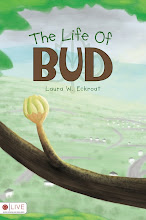
A Story Blooms from Rich Soil
Kindergarten teacher Laura Eckroat had a book in the works for awhile. When she struggled with the loss of her father the story found life. Teachers will find a resource for their classroom and a role model for building on the teachable moment.
http://lauraeckroat.tatepublishing.net/
http://lauraeckroat.tatepublishing.net/
Thursday, February 12, 2009
New "Nation at Risk" Tells a Different Story
Recall the uproar caused by the Nation at Risk report suggesting our field learn a few things from the business world. Carl Glickman invites us to look through a present-day lens, a "must read" for educators. Enjoy!
http://www.forumforeducation.org/blog/latest-nation-risk-report.
http://www.forumforeducation.org/blog/latest-nation-risk-report.
Wednesday, February 11, 2009
Duke Ellington in the Special Ed Classroom
Today I had the pleasure of observing students in an elementary special education classroom individually interpret the music of Duke Ellington through art. Under the guidance of Helen, a Chinese-American student teacher in an alternative route to certification, children of a variety of cultures explored some of the roots of jazz. Each child drew or painted what the music meant to them. Several children clearly found the beat of the music, displayed in a variety of lines with peaks and spaces, colors and patterns. Others drew dancers, instruments, and musicians. Each picture was unique and beautiful. There were plans for writing about their interpretations and posting of their work in the hallways. I was taken by the honoring of culture across cultures. The uniqueness of their drawings told a story of attention to both the music and each child's own inner drummer. As we walked down the hall after class Helen told me of how tired but satisfied she is at the end of the day. Her smile gave genuine confirmation.
Tuesday, February 3, 2009
To share a story or no?
A teacher of only a few years called me last week with a question. She gave me permission to post it here for your thoughts.
"It's painful to see my colleagues in such stress. What's worse it feels like the kids are the ones that pay for it." She talked of meetings and faculty lunchroom talk that was negative about kids and their parents. As one whose family had struggled with job loss and frequent moves when she was growing up, she knew how hard times affected kids, families, and their relationship with school. She didn't feel comfortable talking with colleagues in the building about this but she thought she could let kids in her class know she'd been there too. She didn't know if this would open up a can of worms, if she should just stick with the curriculum, or if she had a responsibility to talk about hard times with her students. What do you think?
"It's painful to see my colleagues in such stress. What's worse it feels like the kids are the ones that pay for it." She talked of meetings and faculty lunchroom talk that was negative about kids and their parents. As one whose family had struggled with job loss and frequent moves when she was growing up, she knew how hard times affected kids, families, and their relationship with school. She didn't feel comfortable talking with colleagues in the building about this but she thought she could let kids in her class know she'd been there too. She didn't know if this would open up a can of worms, if she should just stick with the curriculum, or if she had a responsibility to talk about hard times with her students. What do you think?
Sunday, February 1, 2009
Stories that light our way
I'm interested in how learning communities large and small are responding to the increased challenges of our times. I want this to be a place to capture the stories of resilience and creativity. I want us to share resources and ideas. Of one thing I'm confident: teachers draw on incredible stores of creativity when looking for the low cost solution with students and families at the center.
Staying connected can help us to stay grounded in purpose and to be there for one another. Click on the books to the right and the links below to see other networks with similar purpose.
Staying connected can help us to stay grounded in purpose and to be there for one another. Click on the books to the right and the links below to see other networks with similar purpose.
Subscribe to:
Comments (Atom)